

You dress interior plastic by material, not by shine
Most people blast a glossy cockpit spray onto a dusty dashboard, then wonder why it's shimmering in blotches three days later and blinding them through the windscreen every morning. Interior plastic care isn't a spray-and-done product. What your cockpit actually needs comes down to the material and the order you work in, not the brand on the bottle.
A good interior plastic dressing lays down a satin-matte, antistatic protective film with a UV blocker on hard plastic and rubber. It goes onto a clean, dry surface and gets dosed onto an applicator, never straight onto the part.
Dressing isn't a cleaner, and shine isn't a mark of quality
Interior plastic care is an emulsion that revives faded hard plastic and shields it from UV and static build-up with a satin-matte film. It doesn't clean. That's the first and most expensive mix-up in cockpit care, and it catches almost everyone the first time they pick up a bottle.
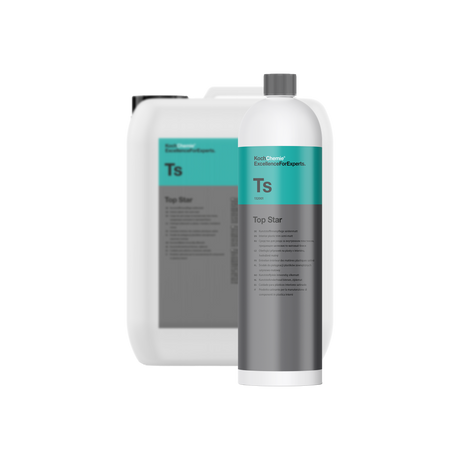
A dressing seals the surface, a cleaner opens it up. Mix the two up and lay dressing over a dusty or greasy panel, and you seal the dirt in with it. Two or three days later you get blotches and water marks, because the trapped particles pull in moisture. The Koch-Chemie Top Star Ts is exactly that kind of dressing, not a cleaner, and its data sheet says so plainly.
The second mistake is chasing shine. A wet, high-gloss look feels like the goal at first, but it's the opposite of what carmakers deliver from the factory. The pros work toward a natural satin-matte finish, not a greasy plastic slick. High gloss mirrors in the windscreen, dazzles you with the sun low on the horizon, and looks like the accessory shelf, not a new car.
Satin-matte means the surface gets its depth and its original colour back without turning into a mirror. That exact look is why interior care is one of the most-read topics on our site. The Top Star Ts product page holds readers for over 220 seconds on average, well past what a paint-care product gets, because this is where a lot of people first click that matte is the pro target and gloss is only down to taste.
One simple test tells you whether a dressing has settled right. Run a finger over the panel after the final wipe. If it leaves a smeary film or a fingerprint, you used too much or skipped the wipe-down. A properly dressed surface feels dry and smooth, not tacky, and reads evenly matte in raking light instead of mirroring back in patches.
Silicone-oil-free, antistatic, UV protection: the three things that separate them
The most important technical line in interior plastic care runs between formulas with silicone oil and those without. It decides whether you can keep working cleanly in your own car later, or whether you buy yourself a permanent problem on the glass.
Old-school cockpit sprays with silicone oil creep along the airflow from the vents onto the glass and paint. Once they're there, they mess with polishes, coatings and any bonding job, say fitting a dashcam or a film. A silicone-oil-free dressing like the Top Star Ts doesn't have this problem, which makes it the first pick when the same car also gets its paint done. This is exactly where a pro product parts ways with a DIY-store spray.
The second differentiator is the antistatic effect. Plastic takes on an electric charge and pulls in dust like a magnet, especially over a dry winter when the heater bakes the air inside the cabin. A dressing that lowers the surface tension buys you longer intervals between cleans, simply because less dust settles. The third is UV protection, which slows the fading and the going-brittle on the parcel shelf and under the rear window, exactly where the summer sun hits hardest.
A fourth, easily missed criterion is documented material compatibility. A Daimler approval means the dressing has been tested on OEM plastics and won't attack or discolour the part. On a material meant to stay in the car for fifteen years, a tested approval is worth more than any marketing promise about deep gloss. Buy cheap and you risk hardened or smeary surfaces that you can't walk back.

What actually matters when you're choosing
When you pick an interior plastic dressing, the finish comes first, then how it plays with the rest of your care routine, and only then how far it stretches. Work through it in that order and you won't make a bad call, whatever brand ends up on the bottle.
Ask yourself first whether you want satin-matte or glossy. If you're after that factory-fresh look, grab a matte dressing. Even if you deliberately like a slight sheen, still reach for a matte one and go easy on the dose, because you can build a subtle shine up from matte, but you can't pull matte back out of high gloss. The dose drives the look, not the product.
Next, check whether you also do paint or glass in the same car. If you do, silicone-oil-free isn't an option, it's a must. A single haze of cockpit spray on a freshly sealed window can write off the coating, and you'll be fighting streaks for days. Last, look at the coverage: with a good emulsion, 5 to 10 ml covers a whole interior, so a one-litre bottle lasts you years and several cars.
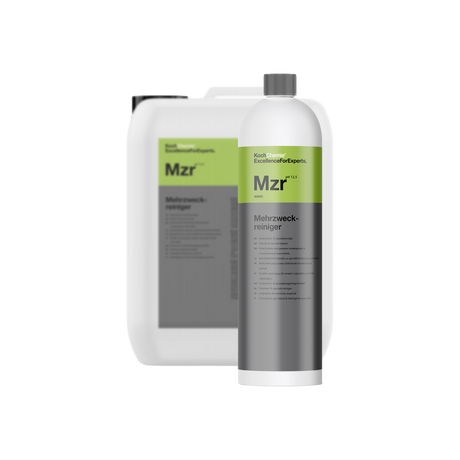
What a dressing can't fix is dirt. Dressing belongs on a clean surface, so you always need a matching cleaner first. For lightly dusty hard plastic a heavily diluted all-purpose cleaner does the job; for baked-in nicotine film or greasy hand marks, an alkaline heavy-duty cleaner like the Koch-Chemie Mzr at high dilution. You'll find the full line-up of dressings and matching cleaners in our interior plastic care category.
How often you need to re-dress depends on where the car sits. One that parks in the sun every day wants a fresh coat every two to three months or so, because that's when the UV protection earns its keep. A garage car gets by on twice a year. What matters more than a fixed interval is the state of it: as soon as the panels look dull again or dust comes back noticeably fast, the antistatic film is spent and it's time for a new coat.
Clean, dry, onto the applicator, work it in, wipe off
The right workflow for interior plastic is always the same, five steps: clean, let it dry, spray onto the applicator, work it in, go back over it with a dry cloth. Skip a step and you'll see it by day three at the latest, in blotches or a tacky surface.
Clean first with an all-purpose cleaner at the right dilution and let the surface dry all the way. Only on dust-free, dry plastic does the dressing get to work. Then spray the emulsion onto an applicator sponge or a soft microfibre cloth, never straight onto the dashboard. That way nothing lands on the radio, display, glass or steering wheel, where it has no business being and only throws reflections or turns things slippery.
Work the dressing in with even, overlapping passes and let it soak in for 30 to 60 seconds. Then comes the step most people leave out, and it's the one that counts: the wipe-down with a dry microfibre cloth. Without it the surface stays tacky and ends up pulling in more dust than before, so the whole thing backfires. A full interior plastic job on a mid-size car takes under ten minutes with all five steps.
Temperature makes or breaks the result. Work at room temperature, not in blazing sun and not on hot plastic. Above 30°C the emulsion flashes off too fast and leaves wipe marks you'll only get rid of by cleaning all over again. A grey, cool, rainy day like today is ideal for it: in the showroom or a garage you've got a steady temperature, no direct sun and no rush.

Our pick for cockpit, seats and exterior plastic
For interior plastic care we lean on three products, split by material: a dressing for hard plastic, a cleaner for the prep, and a concentrate for the materials that don't take a dressing at all. A clean cockpit needs no more bottles than that.
The core product is the Koch-Chemie Top Star Ts, a silicone-oil-free dressing emulsion with a satin-matte finish, UV protection and an antistatic effect. It's Daimler-approved and lays a protective film on the dashboard, door cards, centre console and pillars that visibly revives faded panels. How it works in detail and where its limits are, we've laid out in full in our piece on caring for the cockpit with Top Star Ts.
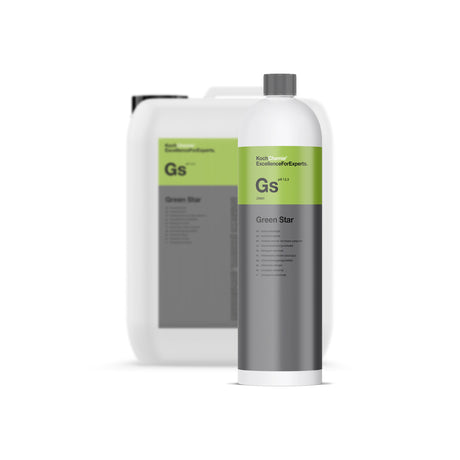
Before that comes the cleaning. The Koch-Chemie Mzr is an alkaline heavy-duty cleaner at pH 12.5 that dilutes from 1:5 to 1:50 and pulls oil, nicotine and grease out of pores and fibres. For sensitive soft-touch surfaces you run it heavily diluted and test on a hidden spot first, because neat it's too harsh for soft surfaces. For stubborn door shuts and sills you can let it go in stronger.
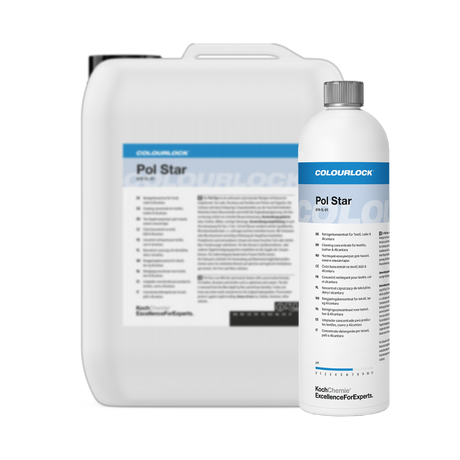
For seats, Alcantara and leather, plastic care is the wrong category. Those materials need their own concentrate like the COLOURLOCK Pol Star, which cleans fabric, Alcantara and pigmented smooth leather from one bottle, dosed from 1:5 to 1:20. How one concentrate gets three materials clean, we show in our post on cleaning car seats with Pol Star. We've bundled the right kit for the whole cockpit in our interior care category.
If you want to do interior and exterior plastic in one go, pair the Top Star Ts with its tougher exterior counterpart. Both share the silicone-oil-free formula, so you can sort the cockpit and the bumpers in the same pass without swapping tools or risking a silicone haze on the glass. On a used car you've just taken over, that's the fastest way to bring both up to the same level.
Which type for which material inside
The material question decides which product you reach for, and just as importantly, where you use no dressing at all. Getting this right keeps you clear of the most expensive mistakes and turns three bottles into a complete system that hits every surface in the cabin properly, instead of running the same half-baked compromise everywhere with a one-size-fits-all spray.
Smooth and textured hard plastics, hard components and rubber seals are the dressing emulsion's turf: dashboard, centre console, door cards, pillar trims, boot walls and the rubber on window and door seals. This is where the Top Star Ts freshens things up and guards against further fading. For black exterior plastic on bumpers, trim and wheel arches, the exterior counterpart Plast Star Pss is the tougher pick, because it has to take wind, water and road salt.
Wherever grip is a safety matter, a satin-matte dressing has no place. Steering wheel, gear lever, pedals, handbrake grip and floor mats stay out of it, because the film drops the friction by a hair, and that hair is exactly what you don't want on the controls you steer the car with. These surfaces only get cleaned, not dressed, and that's not a matter of taste, it's safety.
Fabric, Alcantara and leather also call for a different system, namely an upholstery and leather concentrate rather than a plastic dressing. And on fully dried-out, chalky plastic, like a fifteen-year-old cockpit, every dressing hits a wall: with no intact base for the film to anchor to, only replacement or a respray will do. An honest dressing won't bring dead material back to life; it protects intact material from dying.

Detailing1 insight: The most common mistake we see on test cars outside our showroom in Nordhorn is dressing on an uncleaned cockpit. Spray the Top Star Ts onto a dusty dashboard and two or three days later you've got blotches, because the dressing seals the dirt in along with it. The second thing: never spray straight onto the part, always onto the applicator. We once had to redo a cockpit where the excess had run into the vent grille and stank for weeks. Five minutes of prep and a sponge save you exactly that kind of redo.
No time for the whole post? Get it summarized:
Add Detailing1 as a preferred source on Google